
What's Arising?
Blogs & Podcasts
Reflections, conversations, and explorations on the journey toward wholeness.
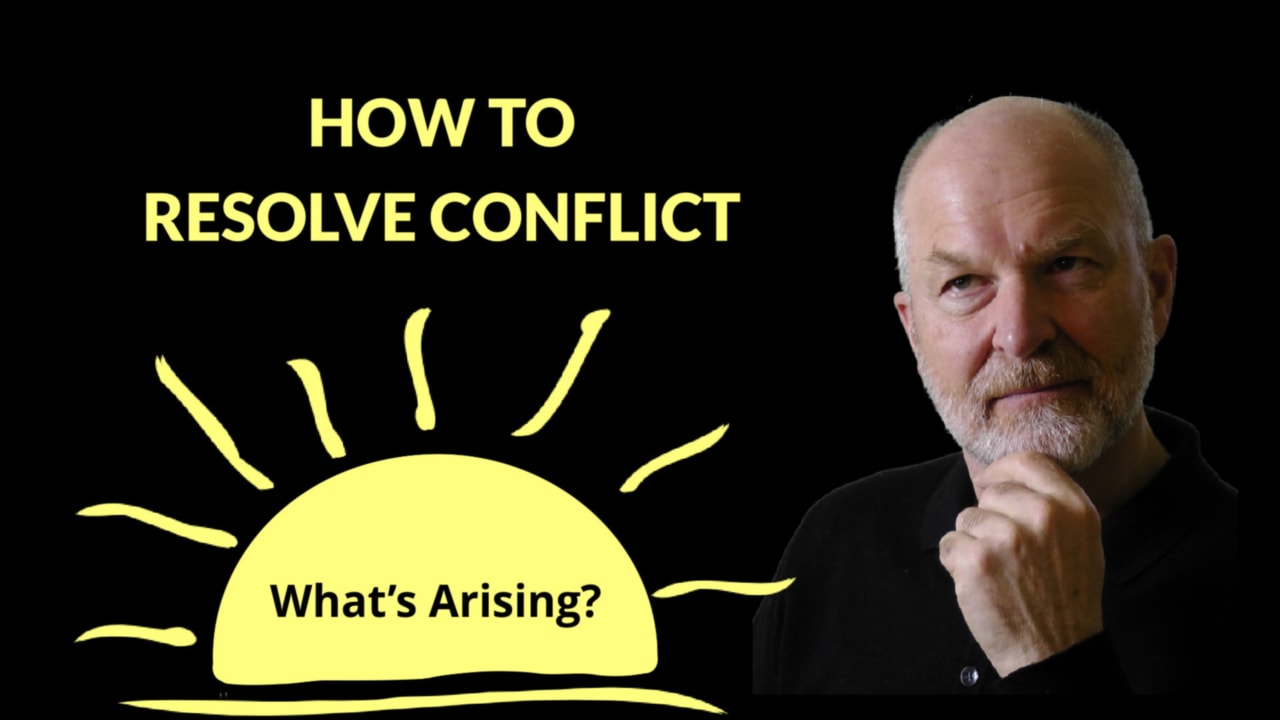
Resolving Conflict Through Shadow Work and Self-Awareness
... Episode 10 of What's Arising
This episode has a similar theme to the last one on "Ending All War" but it seems to be arising again and again, so perhaps it is worth repeating in another way. Resolving conflict is generally difficult. Emotions are highly charged. The risk of being hurt or hurting the other is high. Rather than resolving conflict with love, compassion and understanding, it becomes more about whether we win or lose the war. We often get stuck in blame, shame and right/wrong thinking. So what is the way out?
THE WAY OUT IS IN.
At the root of most conflict is 'Shadow', especially conflict that is highly charged. If we are going to fully resolve conflicts within ourselves, our relationships, and our world, we need to look deeper than the surface symptoms and heal the underlying trauma and shadows at the root of the conflict. We need to release the 'charge'.
Learn more about Shadow-work: https://www.wisdomways.net/shadowintegration/
Open Dialogue is one approach to build safe spaces to resolve conflict and get deeper insight into new possibilities. https://www.wisdomways.net/dialogue/
Transcript
Welcome to What’s Arising?
This episode is about conflict.
As before, before I get into the podcast, I am going to ring my bowl. The bowl is as much for me as for you. It helps me enter a different space — to become connected, present, and open to what wants to arise around the topic.
I hope you enjoy it. I hope it helps both of us enter a different state and perhaps learn something together.
[Music / Singing Bowl]
I had not planned on doing an episode on conflict right now, but I had an uncomfortable conversation today. I had also been sitting with the anticipation of that conversation for the past few days.
Being in conflict with others is not my favorite place. I do not know if anyone really enjoys being in conflict with another person or group of people. It is something many of us tend to avoid.
If you are like me, you may not have been raised with much capacity or skill for conflict. I learned to avoid conflict. Emotions were mostly suppressed, so I did not really learn how to work with conflict in a healthy way.
I can imagine other cultures or families where conflict is expressed more fully. Maybe in some Southern cultures, Italian families, or South American families, there is more passion. Perhaps an argument arises, both people fully enter it, and then it is done. They let it go.
But in the culture I grew up in — or at least in my family and experience — conflict was often held inside. I may carry it for a while unless I can get to the source of what it is really about.
This conversation about conflict feels important because, as a society, we do not seem to have strong capacities for dealing with deep conflict. We can see this in the conflict between Israel and Palestine, in Ukraine and Russia, and in many other countries and societies around the world.
Conflict can lead to war, death, and many atrocities. So it feels important to explore where conflict comes from, what the repercussions are, and how we can resolve conflict in healthier ways rather than suppressing it or having it burst forward again.
Conflict tends to repeat as a pattern unless it is healed at the source.
In a relationship with a spouse, friend, boss, colleague, or family member, we may have an outburst. Some energy gets released, and for a while the conflict seems to disappear. Maybe it is partially resolved, or maybe the energy has simply subsided.
Then some form of it comes back again — perhaps with the same person, or perhaps with someone else. But often, it is the same energy returning.
Another strategy is to suppress it and say nothing. Then it circles around in the head and emotions for days. It affects everyone else in our life. Conflict with a boss, partner, friend, or society can ripple into our health, balance, joy, and well-being.
At the source of every conflict, I believe there is often an energy I have referred to in other podcasts as shadow.
Shadow is born in some kind of conflict with self. Conflict is created from shadow, and conflict is often sustained by the shadow that was created in the first place.
The way to finally resolve a particular conflict is often to do the inner shadow work with ourselves, because that is where the source is.
When we go through a difficult situation as a child, we may feel rejected. There may be physical trauma, severe trauma, sexual abuse, bullying, or even something that seems relatively minor. Perhaps we are shut down in a conversation with a parent and feel we do not have a voice.
That pattern may repeat through the parent’s own shadow and behavior. We learn to separate from the part of ourselves that has a voice. If using our voice brings rejection, hurt, or loss of love, we may push that part away.
We begin to come into conflict with parts of ourselves that have been rejected, suppressed, or made unwelcome.
Maybe we stood up and shone in our joy, and someone shut it down because they were uncomfortable with our happiness. That creates a conflict with the other person, but eventually it becomes a conflict within ourselves.
We suppress the parts of ourselves that are not welcomed. We push them down. And that is where shadow is born.
Now we have conflict with self, which becomes the root of conflict with others.
This pattern often begins in childhood, repeats through adolescence, and becomes solidified over time. Then it shows up in our adult relationships.
Conflict also comes through conditioning. We may be conditioned to dislike or hate a certain race, group, worldview, or type of person. We project that hate outward. Even hatred of racism, or hatred of people who are racist, can become a form of shadow if it comes with judgment, contempt, and separation.
It may be true that someone is acting from racism, but if we meet that only with hatred, we remain in conflict rather than openhearted compassion.
What was their journey?
What created that worldview in them?
What shadow is operating in us as we judge them?
Looking at our own judgments, separation, and suppression is part of the work.
One reason conflict is so disturbing is that when shadow arises, deep emotions and trauma arise with it. We may be afraid of ourselves and what we might do. We may be afraid of the other person and what might happen. The original wounding enters the space.
It feels uncomfortable. We feel attacked. We may not feel able to handle it because we never learned to handle it in the first place.
There is so much energy in conflict: anger, sadness, hurt, fear, and shame. It is no wonder we do not want to go there.
And in many ways, we probably should not go there unconsciously. The external expression of shadow can be hurtful and dangerous. It can lead to physical violence, war, emotional violence, and pain on both sides.
So how do we resolve conflict?
Shadow is created through suppression, rejection, and projection. Individually, we push things down, try to control them, censor them, or project them onto others.
“They are the angry one.”
“They are the incompetent one.”
“They are evil.”
“They are the problem.”
These may be parts of ourselves we have pushed away or refused to own.
This is also happening collectively right now. Many shadows are rising into the open, and our habitual response is to push them down, censor them, control them, shame them, blame them, or punish them.
The lies, corruption, cheating, fractured perspectives, and polarized narratives in the world are different shadows rising in the collective. We are entering a dangerous time.
What do we do with collective shadow?
Often, we do the same thing we do with our personal shadow: we project it outward and go to war, or we suppress it inward and create inner war. Neither actually resolves the shadow.
The more we push judgment, shame, and blame into the world, the more energy we add to the collective fracture. We amplify the wave. We become part of the drama.
That is not the way to resolve conflict.
I will admit that one skill I do not have fully developed is how to have difficult conflict conversations. I have learned some things, but I am still a work in progress.
Much of my experience with conflict happened before I understood shadow work. In those situations, I would often come in with heat, righteousness, blame, and a need to show that the other person was the problem.
What happened?
Separation. Breakup. Distance. Another person pushed away, or I pushed them away. The conversation ended, but the pattern remained. Then it arose again with someone else who was willing to battle my shadows, or whose shadows wanted to battle mine.
I have learned that, for the most part, I cannot change the other person. Trying to fix the other person is not usually a successful strategy.
Yes, they may have their shadows. And I have mine. In conflict, shadows battle each other.
Most of us do not like being changed by someone who is blaming or attacking us. I do not like it, and neither do they.
If we are going to enter conflict differently, we need to find a way into more heartfelt, open, transparent conversation.
There are helpful practices for this, including Nonviolent Communication and other methods. It is important to create a safe space, or container, before entering difficult conversations. That may include agreements about how we will speak, how we will listen, how we will avoid interrupting, and how we will make sure each person feels heard.
A talking object can help. Reflective listening can help. Repeating back what we heard can help. These kinds of practices support both people in feeling seen and heard.
This is what I mean by creating a container: a safe space, trusting space, loving space, listening space, and respectful space.
How are we going to have this conversation so that we do not simply hurt each other?
Conflict needs a different kind of conversation — a dialogue where we listen, suspend assumptions, notice judgments, and remain curious.
What is happening inside me?
What am I feeling?
What am I noticing?
What is happening for the other person?
These are useful questions in any conversation, and especially in conflict.
For myself, what works best is to deal with the shadow through self-dialogue before I ever enter the conflict conversation.
If I can work with the emotional charge inside me first, I enter the space differently.
If a conflict is beginning and I am wise enough to notice the charge in me, I can say:
“This is not a good time for this conversation. I am noticing a charge in myself, and I need to do some inner work to discover what that charge is about before we continue.”
Then I can take the charge back into myself.
What is this about?
What can I not stand in the other person?
What do I hate about that behavior?
What feels hurtful in this situation?
From there, I take it into a shadow process, going back to the source of when that pattern arose. I look for the part in me that is resisting, hating, or rejecting the energy I see in the other person.
For example, in the past, I could become angry at people I labeled as incompetent. But when I turn that around, I might ask:
Am I afraid of being incompetent?
Do I hate feeling incompetent?
Do I fear failure?
Do I fear looking stupid?
Do I fear not being good enough?
If I work with those fears inside myself, then I can enter the conversation without labeling the other person with that same charge.
When the charge is resolved in me, I can come into more compassion. My energy changes. I can listen more deeply to the other person’s experience.
If I am listening from a place of love, the whole conversation may shift. It may not enter the same charged conflict that would have happened if both of us had arrived carrying unresolved shadow.
For me, the process involves self-dialogue with the part of me that is activated. Instead of pushing that part away, I bring it closer. I come to understand it. I recognize the gift and insight within the shadow.
There is almost always a gift inside the shadow.
When we integrate that energy, we can show up differently in the world.
This applies not only with family, partners, and colleagues, but also with the conflicts we see in the world: war, politics, internet drama, and polarization.
When we show up as more of our whole self, we are less caught in the drama. We are more at peace. From a place of neutrality or lower charge, we have more options available. We are not lost in emotion, so we can ask:
What is the correct response here?
Can I respond from peace and love rather than jumping into the drama?
Life will always unfold some kind of drama. But when we are not adding our own charge to it, we can bring compassion and love into what is unfolding.
In that way, we withdraw some of our energy from the collective drama. I like to hope there is a little less charge in the world when I do not carry as much charge myself.
That does not mean we never set boundaries.
Sometimes the shadow is the inability to set boundaries or stand up for ourselves. In those cases, the work is not retreating from conflict. The work may be standing, speaking, protecting, and setting clear boundaries.
You may not come into peace with every person. Some people may not be healthy for you. They may not be willing or able to look at their own shadow. They may continue to lie, manipulate, harm, or violate boundaries.
There is no need to invite a thief into your house simply because you have compassion for them.
You can have love and care for someone and still set boundaries. You can move someone out of your life with compassion for yourself.
They may still bring conflict toward you, but you do not have to carry the charge that pulls you into the conflict. You can create restraint, boundaries, and distance where needed.
So I hope this reflection is helpful in terms of conflict.
I know I am still a work in progress. I am in a conflict right now, and there will likely be another conversation. I probably have more inner work to do before that conversation. I do not yet know if the other person will be able to see what we discussed, or if I have found all the insight I need to transform in myself.
The whole conversation is a work in progress.
And I expect there will be a deep gift in it for me, because I care about conflict in the world. I care not only about shadow work, but also about how we bring people back together into trusting, safe spaces where we can redesign, regenerate, and reformat our world based on kindness, peace, and generosity rather than the direction we often seem to be going.
Thank you for showing up for this reflection.
If you have comments, please share them. If you like what I am saying and want to hear more, please subscribe.
I would also love to hear what other subjects or thoughts you have in the whole realm of shadow work and moving toward a more peaceful, generative world.

Topics Explored
Shadow Integration • Wholeness • Freedom • Dialogue • Relationships • Personal Growth • Consciousness • Community • Leadership • Human Development • Individual & Collective Shadow Patterns • Beliefs

Pathways toward inner freedom and wholeness.


© WisdomWays. All rights reserved.